


How Can Parents Choose Among the Top Schools in Panchkula for Their Child’s Future?

Choosing a school is one of the most important decisions parents make for their children. A good school does more than teach subjects and prepare students for examinations. It creates an environment where children can learn, ask questions, develop confidence, discover their interests, and build strong values. With many educational options available, parents often search for Top Schools in Panchkula that can provide a balanced combination of academics, activities, modern facilities, safety, and personal attention.
For families looking for a CBSE School in Panchkula, it is important to look beyond advertisements and compare what each school actually offers. Parents should understand the curriculum, teaching methods, learning environment, infrastructure, student support, co-curricular opportunities, and communication between school and parents.
What Should Parents Look for When Choosing a School?
Every child is different. Some children learn quickly through visual activities, while others understand concepts better through discussions, experiments, projects, or practical examples. Therefore, the right school should offer a learning environment that supports different learning needs.
Academic education is naturally important, but it should not be the only consideration. Children spend many important years at school, so the environment should also help them develop communication skills, discipline, creativity, teamwork, responsibility, and confidence.
Parents should also consider whether the school encourages students to participate rather than simply memorize information. When children are encouraged to ask questions and understand concepts, learning can become more meaningful.
Why Is a Strong Academic Foundation Important?
A strong academic foundation helps children become comfortable with important subjects such as English, mathematics, science, social science, and languages. It also prepares them for more advanced learning in higher classes.
The CBSE curriculum is followed by many schools because it provides a structured academic framework. However, the effectiveness of education also depends on how the curriculum is delivered inside the classroom.
Good teachers explain concepts in simple ways, encourage questions, identify areas where students need additional support, and provide opportunities to apply what they learn.
The Bharat School follows the CBSE curriculum and states that its approach focuses on conceptual understanding along with holistic development. The school also describes a combination of Montessori and play-way pedagogy in its pre-primary section.
How Do Modern Classrooms Improve Learning?
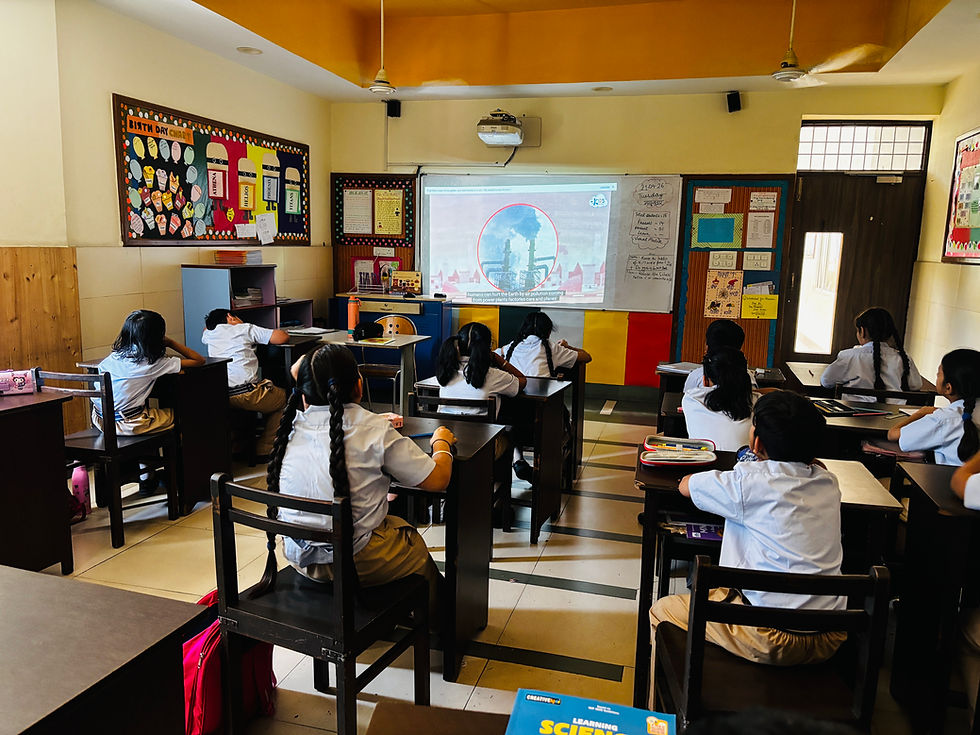
Technology has changed the way students learn. Modern classrooms can make lessons more visual, interactive, and engaging. Digital presentations, educational videos, interactive activities, and other learning resources can help students understand difficult concepts more easily.
However, technology should support teachers rather than replace effective teaching. A good classroom combines technology with discussion, explanation, activities, reading, writing, and practical learning.
Parents visiting schools should observe whether technology is being used meaningfully. A smart classroom is valuable when it helps students understand a concept better and participate actively in the lesson.
The Bharat School highlights smart classrooms and air-conditioned classrooms among its facilities, along with a stated student-teacher ratio of 1:30.
Why Should Parents Consider Holistic Development?
Academic marks are only one part of a child's development. School years are also the time when children learn how to communicate, cooperate, solve problems, handle responsibilities, and interact with others.
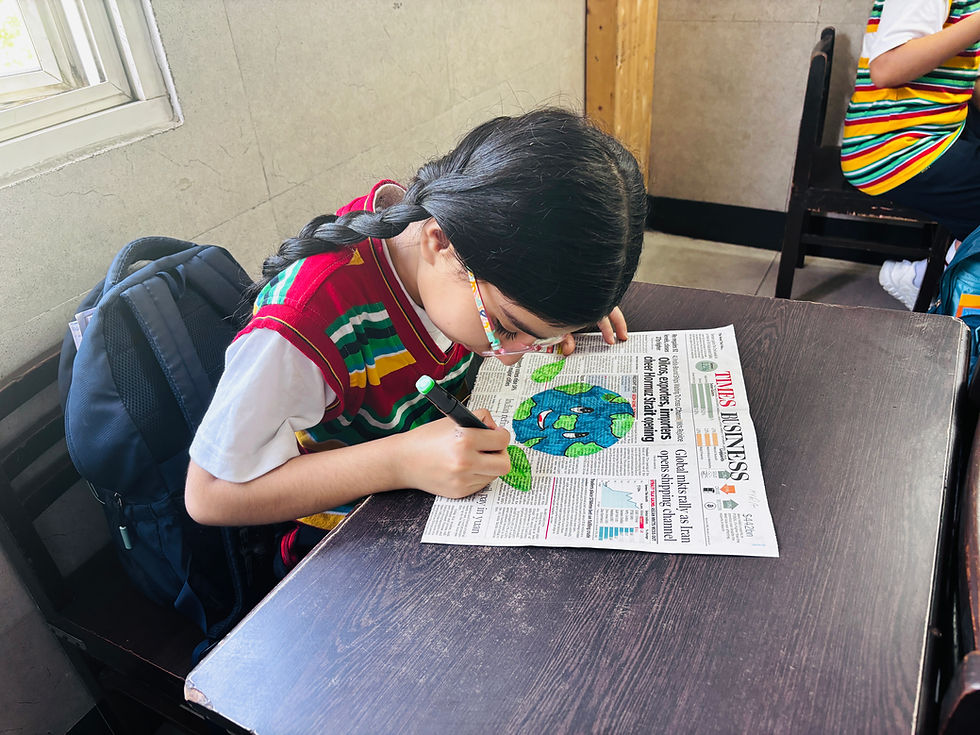
Sports, cultural activities, competitions, creative activities, and other experiences give students opportunities to discover their strengths. Participation can also help children become more confident and comfortable working with others.
A balanced school encourages students to study seriously while also giving them opportunities to explore their interests. This approach can help children develop skills that are useful both inside and outside the classroom.
Schools that provide opportunities beyond textbooks can help students understand that education is not limited to examinations. Learning can happen through sports, activities, projects, teamwork, events, and everyday experiences.
What Role Does School Infrastructure Play?
Infrastructure directly influences the daily school experience. Comfortable classrooms, clean surroundings, appropriate learning resources, activity spaces, safe premises, drinking water facilities, and transportation services can all contribute to a better environment for students.
Parents should not choose a school only because it has attractive buildings. Instead, they should consider whether the facilities are useful, maintained properly, and designed around students' needs.
Safety is another important consideration. Parents should ask about school entry procedures, transportation arrangements, supervision, emergency practices, and communication systems.
The Bharat School lists facilities including secured premises, GPS-enabled school transport, RO water coolers on every floor, school-parent connectivity, smart classrooms, and air-conditioned classrooms.
How Important Is Teacher-Student Interaction?
Teachers play a major role in a child's educational journey. A supportive teacher can make students feel comfortable asking questions and discussing problems.
Personal attention becomes especially important when students struggle with a particular subject. Teachers who understand individual learning needs can provide additional guidance and encourage students to improve without unnecessary pressure.
Parents should therefore pay attention to the interaction between teachers and students when visiting a school. A positive classroom environment should encourage students to participate and express their ideas.
Communication between parents and teachers is equally important. Regular updates can help parents understand their child's academic progress, participation, behaviour, and areas where additional support may be required.
Why Is Parent-School Communication Important?
Education becomes more effective when parents and teachers work together. Parents know their child's habits, interests, strengths, and challenges, while teachers observe the child in an academic and social environment.
Regular communication allows both sides to share useful information. It can help parents understand how their child is progressing and allow teachers to understand factors that may affect learning.
For this reason, parents should ask about the communication channels available to them before selecting a school. A transparent and accessible system can make it easier to discuss concerns and celebrate a child's achievements.
The Bharat School specifically highlights school-parent connectivity as one of its facilities, reflecting the importance of communication between the school and families.
How Can Activities Support a Child’s Personality?
Children need opportunities to explore their interests. Activities such as sports, art, music, public speaking, competitions, cultural events, and group projects can support confidence and creativity.
Participation also teaches children lessons that are difficult to learn only through textbooks. For example, sports can teach teamwork and discipline, while group projects can encourage cooperation and communication.
A child may also discover a new interest through an activity that was initially unfamiliar. Schools that provide varied opportunities can therefore help students understand their own strengths and interests.
This is one reason parents should consider both academics and activities while comparing Top Schools in Panchkula. A balanced environment can give children space to grow in different areas rather than focusing only on examination results.
What Makes a School Environment Child-Friendly?
Children learn better when they feel safe, respected, and encouraged. A child-friendly school should have an atmosphere where students can ask questions without fear and participate in classroom activities.
Teachers should guide students with patience while maintaining discipline. At the same time, students should learn important values such as respect, honesty, responsibility, kindness, and cooperation.
The physical environment also matters. Clean classrooms, comfortable learning spaces, safe play areas, and proper facilities can make the school experience more positive.
Parents can understand the school environment better by visiting the campus and speaking with staff. Instead of relying only on promotional material, they can observe how students interact with teachers and each other.
How Does CBSE Education Support Students?
For families considering a CBSE School in Panchkula, understanding the school's academic approach is important. CBSE education provides a structured curriculum, but schools can differ significantly in how they teach and support students.
A good approach focuses on understanding rather than memorizing answers. Students should be encouraged to connect classroom concepts with real-life situations wherever possible.
The Bharat School adopted the CBSE curriculum in 2017 after previously offering IGCSE and Cambridge examinations, according to its official website. The school describes its educational approach as combining academics with broader personal development.
Parents should therefore ask how lessons are conducted, how students are assessed, how teachers provide support, and how the school prepares children for future academic challenges.
Why Should Parents Visit a School Before Admission?
Online research is useful, but a school visit can provide information that a website cannot fully communicate. Parents can see classrooms, observe the campus environment, ask questions, and understand how the school operates.
During a visit, parents can ask about the curriculum, teaching methods, activities, transportation, safety, communication, assessment, and admission process.
It is also helpful to consider the child's opinion. Depending on their age, children can often provide useful feedback about how comfortable and interested they feel in a particular environment.
Choosing a school should be a thoughtful process rather than a rushed decision. Parents should compare their priorities with what the school provides.
What Can Parents Expect From a Balanced Schooling Approach?
A balanced approach brings academics, activities, values, technology, and personal development together. It helps students prepare for examinations while also developing practical skills.
The Bharat School presents its educational vision around innovative thinking, confidence, exploration, creativity, and character development. Its official information also highlights academics, sports, inter-school activities, and facilities designed to support students.
For parents, the important question is not simply whether a school has modern facilities. The more useful question is how those facilities and educational practices contribute to the child's everyday learning experience.
How Can Parents Make the Final School Choice?
There is no single school that is perfect for every child. The right choice depends on the child's age, learning needs, interests, family priorities, location, curriculum preference, and expectations from the school.
Parents can create a simple comparison based on academics, teaching quality, infrastructure, safety, activities, communication, transportation, and overall environment. They can then visit shortlisted schools and ask questions before making a decision.
The goal should be to find an environment where the child can learn comfortably, develop confidence, build good habits, and prepare for future opportunities.
Conclusion
Selecting a school is a long-term decision that can influence a child's academic and personal growth. Parents should therefore consider more than rankings, advertisements, or facilities. Teaching quality, curriculum, student support, safety, activities, values, infrastructure, and parent communication all deserve attention.
For families searching for a CBSE School in Panchkula, comparing these factors can make the admission process clearer and more informed. A school that combines structured academics with opportunities for creativity, sports, technology, and personal development can provide children with a well-rounded educational experience.
Ultimately, Top Schools in Panchkula are best understood by looking closely at the learning environment, educational approach, facilities, and opportunities offered to students. Parents who research carefully and visit schools can make a decision that matches their child's needs and supports a confident and meaningful educational journey.


Comments