


How Can You Choose the Right CBSE Schools in Panchkula for Your Child’s Bright Future?

Choosing the right school is one of the most important decisions parents make for their children. A good school provides more than classroom education. It helps children develop confidence, learn good values, build friendships, and prepare for future challenges. Parents today look for an educational environment that supports academic success along with physical, social, and emotional growth.
When exploring CBSE Schools in Panchkula, families often consider teaching quality, classroom facilities, safety, transportation, extracurricular activities, and communication between teachers and parents. These factors help parents understand whether a school matches their child's learning needs. Many families also explore Top Schools in Panchkula to find an institution that offers a balanced approach to education.
Panchkula has become an important educational destination for families seeking quality schooling. Understanding what makes a school suitable can help parents make a thoughtful decision and choose an environment where their children can learn, grow, and work towards a successful future.

Why Is CBSE Education a Popular Choice Among Parents?
The Central Board of Secondary Education (CBSE) is a widely recognised educational board in India. Its curriculum provides a structured approach to learning and covers important subjects such as English, Mathematics, Science, and Social Science.
CBSE education focuses on building a strong understanding of concepts. Instead of learning only through memorisation, students are encouraged to understand topics, practise problem-solving, and apply their knowledge to different situations.
Another reason parents consider CBSE education is its structured curriculum across different grades. This can be helpful for families who relocate from one city to another and want continuity in their children's education.
A well-planned CBSE learning environment can also support students as they prepare for higher education. A strong foundation in core subjects helps children develop the knowledge and skills they need for further studies.
However, the quality of a child's education depends on more than the board alone. Teachers, classroom experiences, individual attention, school culture, and learning opportunities also play important roles.
What Should Parents Look for When Choosing a School in Panchkula?
Every child has different interests, strengths, and learning needs. Therefore, parents should consider several factors before selecting a school.
Quality of Teaching and Learning
Teachers have a major influence on a child's educational experience. Good teachers explain concepts clearly, encourage questions, and help students develop an interest in learning.
Parents can learn about teaching methods by visiting the school, speaking with teachers, and understanding how lessons are planned. It is helpful to look for an environment where children feel comfortable asking questions and participating in classroom discussions.
Teachers should also recognise that children learn at different speeds. Providing guidance and encouragement can help students become more confident and independent learners.
Safe and Comfortable Classrooms
A comfortable classroom can make learning more enjoyable. Proper lighting, ventilation, suitable seating, and a clean environment help students concentrate on their studies.
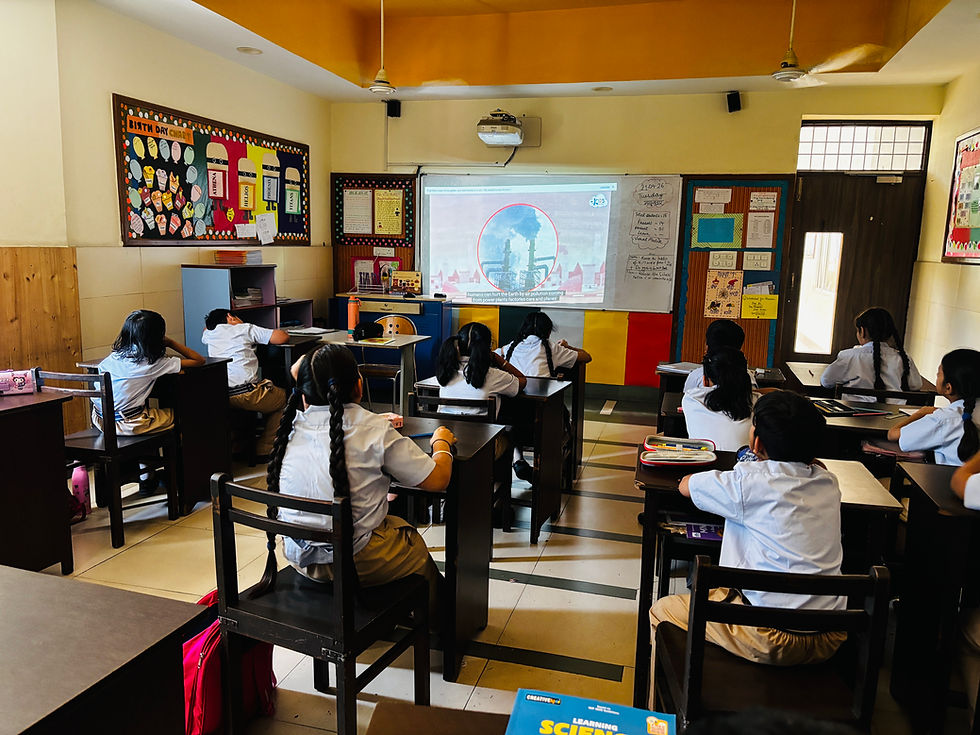
Modern learning tools, including smart classroom facilities, can support teachers in explaining difficult concepts through videos, presentations, and visual examples. When used thoughtfully, these resources can make lessons more engaging.
Parents should also ask about classroom management, student supervision, and the steps taken to maintain a safe school environment.
Individual Attention and Student Support
Children may need different types of support at different stages of their education. Some may need extra help with academic subjects, while others may benefit from encouragement to participate in activities or speak confidently.
A school that values student development should provide opportunities for children to discuss their questions and receive suitable guidance. Regular feedback can help parents understand their child's progress and identify areas where additional support may be useful.
How Do School Facilities Support Better Learning?
School facilities contribute to children's everyday experiences. They provide spaces where students can study, participate in activities, develop practical skills, and interact with classmates.
Smart Classrooms and Technology
Technology can make lessons more interactive when it is used alongside effective teaching. Visual presentations, educational videos, and digital learning resources can help students understand abstract ideas.
Smart classrooms may also encourage students to take part in discussions and activities. Teachers can use different teaching methods to explain topics and support different learning styles.
The goal of technology in education should be to improve understanding rather than simply add screens to the classroom.
Sports and Physical Activities
Physical activity is an important part of a child's development. Sports help children improve coordination, practise teamwork, and understand the value of discipline.
Activities such as running, skating, indoor games, and outdoor sports can provide opportunities for students to stay active and discover their interests.
Participation in sports can also help children learn how to handle both success and disappointment. These experiences support the development of patience, confidence, and a positive attitude.
Clean and Well-Maintained School Spaces
Clean classrooms, hygienic washrooms, safe play areas, and organised common spaces contribute to a comfortable learning environment.
Parents should consider how the school maintains cleanliness and supervises students throughout the day. A well-organised campus can help children feel secure and focus on their activities.
Why Are Extracurricular Activities Important for Children?
Education is not limited to textbooks, homework, and examinations. Children also need opportunities to explore their interests, express themselves, and develop skills beyond academics.
Extracurricular activities can include music, dance, art, public speaking, drama, sports, cultural celebrations, and creative projects. These experiences allow students to discover what they enjoy and practise new skills.
For example, taking part in a school performance can help a shy child become more comfortable speaking in front of others. Working on a group project can teach students how to share responsibilities and respect different ideas.
Such activities also create opportunities for children to learn through experience. They can practise leadership, creativity, communication, and cooperation in a supportive environment.
Parents comparing Top Schools in Panchkula should therefore look beyond academic results and understand how each school supports students' interests and overall development.
How Does The Bharat School Support Students’ Overall Development?
The Bharat School in Sector 12, Panchkula, focuses on creating a learning environment that brings together academic education, personal growth, and Indian values.
A Balanced Approach to Education
Children benefit when learning includes opportunities to ask questions, explore ideas, and understand the world around them. A balanced educational approach helps students develop both subject knowledge and practical skills.
The Bharat School aims to support this balance through academic and co-curricular programmes. Students have opportunities to explore their interests while developing important qualities such as responsibility, cooperation, and self-confidence.
Modern Learning Facilities
The school highlights facilities such as air-conditioned classrooms, smart classrooms, GPS-enabled school transport, parent connectivity, and secured premises. These facilities are intended to support students' learning and everyday school experience.
A school visit can help parents understand how these facilities are used in practice and whether they meet their child's needs.
Learning Through Activities
Activities outside regular lessons can make school life more engaging. Art, music, sports, cultural programmes, and group projects allow children to practise different skills and explore new interests.
Parents can ask about the current activity calendar and the programmes available for their child's class.
Why Is Safety Important When Selecting a School?
A child's safety and comfort should be important parts of every school-selection decision. Parents need to understand how students are supervised, how visitors enter the campus, and how the school responds to emergencies.
A safe school environment includes more than physical security. Children should also feel respected, supported, and comfortable approaching teachers when they have a problem.
Parents can ask about the school's safety procedures, student supervision, hygiene practices, and how concerns are reported and addressed.
School Transportation
For families living in Panchkula and nearby areas, transportation can be an important consideration. The Bharat School provides GPS-enabled school transportation. Parents should confirm current routes, pickup points, timings, and safety arrangements directly with the school.
Reliable transportation can help families plan their daily routines and make the school journey more convenient for children.
How Can Parents Compare Schools Before Making a Decision?
Searching online is a useful starting point, but parents should also gather information directly from schools. A thoughtful comparison can help families understand the differences between educational approaches, facilities, and daily routines.
When researching CBSE Schools in Panchkula, parents can compare the curriculum, teaching methods, student support, campus environment, transportation, and extracurricular opportunities. It is also useful to understand the school's approach to assessments and communication with families.
Rather than relying only on advertisements or online ratings, consider arranging a campus visit. Seeing the learning environment and speaking with school representatives can provide a clearer picture of everyday school life.
Questions Worth Asking During a School Visit
Parents may find it helpful to ask:
How does the school support students who need extra academic help?
What teaching methods are used in different classes?
Which sports, arts, and other activities are available?
How does the school communicate academic progress to parents?
What safety and transportation arrangements are currently available?
What are the admission requirements, fee structure, and important dates?
The answers can help parents assess whether a school aligns with their child's needs and their family's practical requirements.
What Makes a Strong Foundation for Senior Classes?
As children move from primary to middle and senior classes, their educational needs change. They begin to study more complex topics, manage greater academic responsibilities, and think more seriously about future education.
A strong foundation in the early years can make this transition easier. Students need opportunities to improve reading, writing, mathematical reasoning, communication, and independent learning.
Building Conceptual Understanding
Understanding concepts is important for long-term academic progress. When students know why an answer is correct, they can apply the same knowledge to unfamiliar questions.
Teachers can support this process through classroom discussions, examples, practical activities, and regular revision. Encouraging children to explain their thinking also helps them identify gaps in their understanding.
Developing Study Habits
Good study habits help students become more organised. Learning to manage homework, prepare for assessments, maintain notebooks, and ask for help when needed can improve their confidence.
Parents and teachers can work together to encourage regular routines without creating unnecessary pressure. A balanced schedule that includes study, play, rest, and family time supports a healthier learning experience.
Preparing for Future Opportunities
Senior school students benefit from guidance that helps them understand their interests, strengths, and possible educational pathways. Exposure to different subjects and activities can help them explore their preferences.
Schools can support this process by encouraging curiosity, problem-solving, teamwork, and communication. These skills are useful not only in examinations but also in higher education and everyday life.
How Do Values and Discipline Shape a Child’s Personality?
Education also plays an important role in shaping a child's character. Along with academic knowledge, students need to understand respect, honesty, responsibility, kindness, and cooperation.
A positive school culture helps children learn these values through everyday experiences. Working with classmates, listening to different opinions, following shared rules, and taking responsibility for their actions can strengthen their social skills.
Discipline should help children understand expectations and make responsible choices. Clear guidance, fair rules, and supportive teachers can encourage students to develop self-control and respect for others.
Cultural celebrations and school assemblies can also provide opportunities to discuss traditions, community, and shared values. Such experiences help children understand different perspectives and develop a sense of belonging.
The aim is to help students become thoughtful individuals who can contribute positively to their families, schools, and communities.
Why Is Parent-School Communication Important?
Parents and teachers share an important role in a child's development. When they communicate regularly, they can understand a student's progress, discuss challenges, and work together to provide support.
Parent-teacher meetings are useful opportunities to discuss academic performance, classroom participation, behaviour, and areas for improvement. Parents can also share information about their child's interests and learning habits at home.
Good communication should be clear, respectful, and focused on the child's needs. It allows parents to understand school expectations and helps teachers learn more about each student.
The Bharat School highlights parent connectivity as one of its facilities. Parents considering admission can ask about the communication channels currently used, the frequency of progress updates, and how to contact teachers when questions arise.
How Can Parents Make the Admission Process Easier?
Planning ahead can make school admission more organised and less stressful. Parents should begin by checking the school's current admission information and understanding the requirements for the class they are interested in.
It is helpful to keep relevant school records and identification documents ready, while checking the official admission instructions for the exact list required.
Parents should also discuss the fee structure, payment schedule, transport options, school timings, and uniform and book requirements before completing the process.
Contacting the admissions team directly is a useful way to confirm available classes, current vacancies, application details, and important dates.
Why Consider The Bharat School for Your Child’s Education?
The Bharat School is located in Sector 12, Panchkula, and follows the CBSE curriculum. Its educational approach brings together academic learning, co-curricular activities, and an emphasis on personal growth.
The school highlights facilities such as smart and air-conditioned classrooms, GPS-enabled transportation, parent connectivity, and a secured campus. These are useful details for parents to explore when assessing whether the school's environment suits their family.
Its educational vision also places importance on curiosity, creativity, values, and the development of confident individuals. Parents can learn more about the school's approach by visiting the campus, speaking with the admissions team, and reviewing the current academic and activity programmes.
Families should make their final decision after considering their child's needs, the school's current offerings, practical travel arrangements, and the overall learning environment.
Conclusion: How Can You Choose the Right School for a Bright Future?
Choosing a school is about finding an educational environment where a child feels safe, supported, and encouraged to learn. Academic teaching, extracurricular activities, student support, modern facilities, values, and communication with parents all deserve careful consideration.
When comparing CBSE Schools in Panchkula, parents should look beyond online descriptions and take time to understand each school's approach. Visiting the campus, asking questions, and reviewing admission details can help families make an informed choice.
For parents exploring Top Schools in Panchkula, The Bharat School offers a CBSE-based educational environment with a focus on academics, co-curricular learning, and holistic development. Families can connect with the school to learn about its current programmes and admission opportunities.
A thoughtful school choice can help children build knowledge, confidence, positive habits, and the skills they need for the next stages of life.


Comments